
Oven cleaning guide
How to Clean an Oven
To clean an oven, let it go cold, take out the racks to soak, coat the inside with a thick bicarbonate of soda paste or an oven cleaner suited to your oven, give it time to soften the grease, then scrape, wipe and rinse until no residue is left. The door glass and the racks are done last.
- Bicarbonate or oven cleaner
- Door glass, racks and trays
- Catalytic and pyrolytic ovens
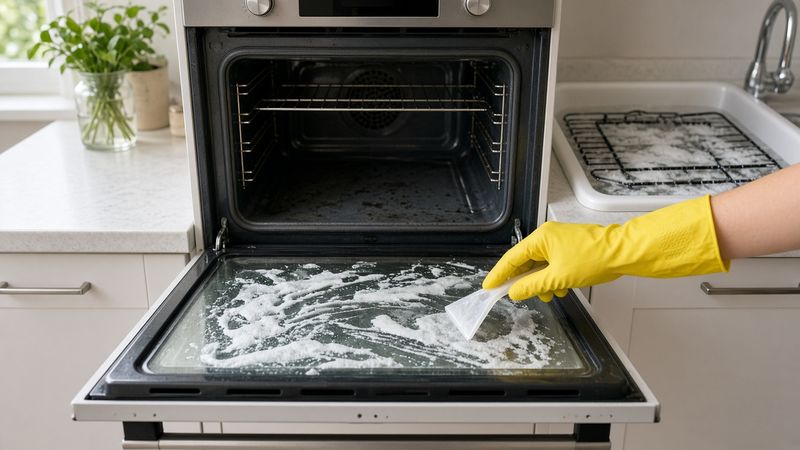
Check Which Type of Oven You Have
The right method depends on the inside of the oven, not the brand. Most ovens have a smooth, glossy enamel cavity that can take a bicarbonate paste or a caustic oven cleaner. Some have rough, matt catalytic liners on the sides and back, and some clean themselves with a pyrolytic programme. Look at the manual, or search for the model number printed on the rating plate inside the door frame, before you choose a product.
| Oven interior | How to recognise it | How to clean it |
|---|---|---|
| Standard enamel | Smooth, glossy dark lining | Bicarbonate paste overnight, or an oven cleaner used as the label directs |
| Catalytic liners | Rough, porous panels on the sides, back or roof | No cleaning products on the liners; AEG’s guidance is to run the empty oven at 250°C for about an hour and wipe out the floor once cool |
| Pyrolytic | A cleaning or pyrolysis setting and a door that locks during the cycle | The programme heats the cavity to around 500°C for 1 to 3 hours, turning residue to ash that is wiped out with a damp cloth when cold |
| Steam or easy-clean enamel | A steam-clean setting, with water poured into the base | Run the programme, then wipe; heavy build-up still needs the bicarbonate method |
Racks, trays and the door glass are cleaned by hand on every type, including ovens that clean themselves.
How to Clean an Oven Step by Step
This is the gentlest method for a standard enamel oven, and it uses bicarbonate of soda, which is mildly alkaline and does not scratch. It suits most grease and light carbon and is the safest place to start in a rented home, where you do not want to mark the landlord’s appliance.
What you need
- Bicarbonate of soda, white vinegar in a spray bottle and washing-up liquid
- Rubber gloves, a plastic scraper and a non-scratch sponge
- Several microfibre cloths, a bowl of warm water and old towels for the floor
- Switch off and let the oven cool. Turn the oven off at the wall switch and wait until the cavity, the door glass and the elements are cold to the touch. Paste and cleaner dry out and streak on warm enamel, and cold water on hot glass can crack it.
- Take out the racks, trays and shelf supports. Lift out the shelves, the grill pan and any trays, then unhook the side runners if your manual shows how. Put them to soak in hot water with washing-up liquid while you work on the cavity.
- Scrape out the loose debris. Brush or vacuum the crumbs and flakes of burnt food from the oven floor, and lift any thick ridges of carbon with a plastic scraper held flat, so the paste reaches the grease underneath.
- Mix a bicarbonate of soda paste. Stir about half a cup of bicarbonate of soda with a few tablespoons of water until it is as thick as toothpaste. A very dirty oven needs a second batch.
- Coat the inside of the oven. Spread the paste with gloved hands or a sponge over the floor, sides, back, roof and the inside of the door. Keep it off the heating elements, the fan, the door seal and any rough catalytic liners.
- Leave it overnight. Close the door and leave the paste for at least 12 hours. It turns brown as it softens the grease, and the waiting does the work that hard scrubbing would otherwise do.
- Scrape, spray and wipe. Lift the paste with the plastic scraper, then mist the white residue with white vinegar so it foams and loosens. Wipe with a damp cloth, rinsing it often, until no white film is left.
- Clean the racks and the glass, then refit. Scrub the soaked racks with a non-scratch pad, rinse and dry them, clean the door glass, and put everything back. Run the oven empty for a few minutes with a window open to dry the cavity.
How to deep clean an oven that has not been done for a long time
A heavily carbonised oven rarely comes clean in one round. Do the bicarbonate method twice, concentrating the second coat on the floor and the back corners, or move to a gel oven cleaner for the black, baked-on patches. Carbon that has been burnt into worn or chipped enamel may stay as a mark however long it is treated, so stop scraping once the surface is smooth to the touch.
How to Clean an Oven with Oven Cleaner
Shop-bought oven cleaners work faster than bicarbonate because most heavy-duty products are caustic, typically based on sodium hydroxide. The UK Health Security Agency notes that stronger solutions of it can burn skin and eyes and that breathing it in irritates the nose and throat, so the label instructions are part of the method, not an extra.
- Read the label first. Check the product is suitable for your oven interior and note how long it should be left. Some gels are made to stay on for several hours.
- Protect yourself and the kitchen. Open a window, put towels or newspaper on the floor, and wear rubber gloves and eye protection.
- Apply it to a cold oven unless the label says otherwise. Coat the enamel floor, sides and back, and the inside of the door glass only if the label says the product is safe on glass.
- Keep it off the parts it can damage. Avoid the elements, the fan, the thermostat probe, the door seal, catalytic liners and the outside of the oven.
- Leave it for the stated time, then lift the softened grease with a plastic scraper and a damp cloth.
- Rinse several times with clean water. Change the water often, because any cleaner left behind will smell and smoke the next time the oven heats up.
- Heat the oven empty for a few minutes with the window open before you next cook.
Never mix oven cleaner with other products. Use one product at a time and rinse between them. The UK Health Security Agency warns that bleach mixed with acidic or ammonia-based cleaners releases harmful gases, so do not add bleach or a limescale remover to the oven to speed things up.
Oven cleaner or bicarbonate of soda?
Bicarbonate is slower, but it is gentle and has no harsh smell, so it suits regular cleaning and lightly used ovens. A caustic cleaner suits thick black carbon on plain enamel, used sparingly and only where the label allows. Many people start with bicarbonate and use a cleaner only on the patches that are left.
How to Clean Oven Door Glass
The door glass shows grease more than any other part of the oven, and it is toughened glass that can be scratched for good by wire wool, metal scourers or a razor blade. Make sure it is cold before you start.
Cleaning the glass inside the oven door
Open the door flat, spread bicarbonate paste over the inner pane and leave it for 30 minutes to an hour, or overnight under cling film for brown, baked-on staining. Work it with a damp non-scratch sponge in small circles, wipe it off, then mist with white vinegar and buff dry with a clean microfibre cloth. Keep paste and vinegar away from the rubber seal and the vents along the bottom of the door.
How to clean between the glass on an oven door
Grease and steam can get between the panes, where no cloth can reach from outside. On many ovens the inner pane slides or lifts out once the door is opened to a set position, and some doors come off their hinges entirely. Follow the manual for your model, note which way round each pane fits, and never force a pane or a clip. If the manual does not show how the door comes apart, or the panes are fixed, it is a job for professional oven cleaning in Bristol rather than a screwdriver.
The outside of the door and the controls
Wipe the outer glass, the handle and the control panel with warm water and a little washing-up liquid on a cloth, then dry them. Spray onto the cloth, not the controls, so liquid does not run behind the knobs or the display.
How to Clean an Oven Without Chemicals
Cleaning an oven without oven cleaner relies on mild household ingredients, time and steam rather than caustic strength. These methods are kinder to enamel and to anyone with sensitive skin or breathing, but they need patience on old grease.
How to clean an oven with bicarbonate of soda and vinegar
This is the step-by-step method above. The bicarbonate softens fat while it sits, and the vinegar sprayed at the end reacts with what is left so the white film wipes away instead of drying on. Using the two together in a bowl first wastes both, because the fizz is over before it reaches the oven.
How to clean an oven with lemon
Squeeze two lemons into an ovenproof dish half full of water, add the halves, and heat it in the oven at a moderate temperature for around half an hour. Let the oven cool until it is safe to touch, then wipe the steamed surfaces with a damp cloth and use the lemon water on a sponge for stubborn spots. It works on light grease and leaves a fresher smell, but it will not shift carbon on its own.
How to clean an oven with a dishwasher tablet
Wearing gloves, dip a dishwasher tablet in warm water and rub it gently over light marks on the enamel and the inside of the glass, re-wetting it as it softens, then rinse with plenty of clean water. Dishwasher tablets are strong detergents, so test a small area first, keep them off seals and catalytic liners, and store them out of reach of children.
Steam cleaning an oven
An oven with a steam-clean setting is run with water in the base, then wiped out. Without that setting, a dish of water heated in the oven loosens fresh splashes in the same way. A handheld steam cleaner should only be used if the manual allows it, because steam can be pushed into the fan, the light fitting and the door vents.
How to Clean Oven Racks, Trays and the Grill
Racks and trays collect the thickest grease, so give them the longest soak. Lay an old towel in the bath to protect the surface, put the racks on it, cover them with the hottest water from the tap and a good squeeze of washing-up liquid or a scoop of biological washing powder, and leave them for a few hours or overnight. Scrub with a non-scratch pad or a stiff brush, rinse and dry them so the chrome does not spot.
How to clean an oven tray and the grill pan
Fill the tray with hot water and washing-up liquid, sprinkle bicarbonate over the burnt patches, and leave it before scraping with a plastic scraper. The grill pan and its wire rack are done the same way. Check the manual before putting enamelled trays or racks in the dishwasher, because some finishes dull or discolour.
The grill element and the fan cover
Do not scrub or spray the heating elements or the grill element. Once they are cold, a dry soft brush removes loose deposits, and the rest burns off in normal use. Some fan covers unscrew for cleaning, but only take one off if the manual says so and the oven is isolated at the wall.
How to Clean an Oven Quickly
When there is no time for an overnight paste, aim for the parts that show. Soak the racks first so they are working while you do everything else. Steam the cavity with a dish of water for 20 minutes, let it cool until safe, then wipe the walls and the door with warm water and washing-up liquid. Use a gel oven cleaner, as the label directs, only on the worst patches of the floor and the door glass, and spend the remaining time on rinsing and polishing the glass, because a clear door makes the whole oven look clean.
Keeping the oven cleaner between deep cleans
Wipe spills once the oven has cooled after cooking, before they bake on again. Use a tray on the shelf below anything likely to bubble over, and clean the glass and racks every few weeks. Small, regular wipes mean the overnight method is an occasional job rather than a long afternoon of scrubbing.
Cleaning the Oven Before You Move Out
The oven is one of the first things an inventory clerk opens at check-out, and grease is easy to compare against the condition recorded in the check-in report. Start it the night before your final clean so the paste has time to work, and photograph the inside, the racks and the door glass once you have finished. The oven is the first section of the end of tenancy cleaning checklist, which covers the rest of the kitchen and every other room in the same order.
If the oven has been used heavily for the whole tenancy, the inner glass is greasy between the panes, or you simply run out of time before the keys go back, the oven can be cleaned on its own before you hand over the property.
Sources and Safety Information
The oven type and safety details above were checked against these manufacturer and UK Health Security Agency pages on 13 November 2026. Your own oven manual and the product label always take priority over general advice.
How to Clean an Oven FAQs
How long should bicarbonate of soda be left in an oven?
Leave the paste for at least 12 hours, ideally overnight with the door closed. On a lightly marked oven a few hours can be enough, but baked-on grease needs the longer contact time to soften before it will wipe away.
Can oven cleaner be used on a self-cleaning oven?
Not on the self-cleaning surfaces. Oven manufacturers such as AEG say not to put cleaning products on catalytic liners, and a pyrolytic oven is cleaned by its own high-heat programme. Check the manual for which parts, such as the door glass, can be cleaned by hand.
Is it safe to cook straight after using oven cleaner?
Only once every trace has been rinsed away. Wipe the cavity several times with clean water, then heat the oven empty for a short while with a window open, so any residue burns off before food goes in.
Why does the oven smoke after cleaning?
Usually because paste, cleaner or loosened grease has been left on the floor or the roof. Let the oven cool, wipe it again with clean water and repeat the empty heat-up until it stops.
How often should an oven be cleaned?
It depends on how often you roast and grill. Wiping spills once the oven has cooled after cooking, and doing the racks and glass every few weeks, keeps a deep clean to an occasional job rather than a long afternoon of scrubbing.
Can a steam cleaner be used inside an oven?
Only if the oven manual allows it. Steam can be forced into the fan housing, the light and the door vents, so most people are safer using the oven’s own steam programme, if it has one, or a bowl of water heated in the oven.
How long does it take to clean an oven?
With the bicarbonate method, about an hour of hands-on work split either side of an overnight wait. A gel oven cleaner shortens the waiting to the time on the label, but rinsing still takes a while.
Ask for an Oven Cleaning Quote
If you would rather not do it yourself, tell us the postcode, the type of oven and when it was last cleaned. Photos of the inside and the door glass on WhatsApp help us reply with an accurate quote.
Your details are used only to reply to your enquiry. See the privacy notice.