
Bathroom cleaning guide
How to Remove Limescale
To remove limescale, dissolve it with a mild acid such as citric acid, held against the scale long enough to soften it, then wipe it away gently, rinse with clean water and dry the surface. The method is the same everywhere, but toilets, chrome taps, shower heads, glass and stone each need a slightly different approach.
- Toilets, taps and shower heads
- Screens, tiles and baths
- Safe products for each surface
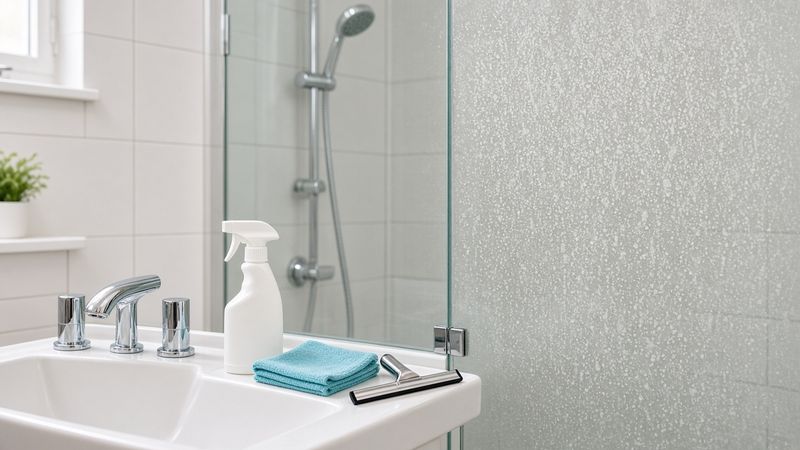
What Is Limescale, and Why Do Bristol Homes Get So Much?
Limescale is the white or grey crust of calcium and magnesium carbonate that hard water leaves behind when it dries or is heated. It forms a ring in the toilet bowl, blocks the jets of a shower head, clouds glass screens and builds up around the base of taps and in plugholes.
Bristol Water explains that the rocks under its supply area are mainly limestone, which dissolves easily and raises the calcium and magnesium in the water, so all of the water it supplies is classed as moderately hard to very hard. It publishes this scale, measured as calcium carbonate:
| Calcium carbonate (mg/l) | Classification |
|---|---|
| 0 to 50 | Soft |
| 51 to 100 | Moderately soft |
| 101 to 150 | Slightly hard |
| 151 to 200 | Moderately hard |
| 201 to 300 | Hard |
| Above 300 | Very hard |
Bristol Water’s postcode checker shows the figure for a particular address. In practice, any bathroom in the city builds up scale quickly, and a shower screen that is not dried after use clouds over quickly.
How to Remove Limescale Safely
Every limescale job follows the same six steps. What changes from one fitting to the next is how you keep the descaler in contact with the scale and how gently the surface has to be treated.
- Check what the surface is made of. Chrome, glass, glazed ceramic and acrylic each need a different touch, and natural stone such as marble, limestone or travertine must not be treated with an acid at all. If a tap or shower has a coloured or brushed finish, read the maker’s care advice first.
- Choose a mild acid. Limescale is alkaline, so it dissolves in a mild acid. A citric-acid descaler, or a few tablespoons of citric acid powder dissolved in about a litre of warm water, suits most bathroom fittings.
- Apply it so it stays in contact. Spray the descaler onto a cloth and wrap or press it against the scale, rather than spraying fittings directly. On flat glass and tiles, a thin even coat is enough.
- Give it time to work. Leave it for the time on the label, or 15 to 30 minutes for home-made citric acid. Thick crusts need a second application rather than more force.
- Loosen the scale gently. Rub with a soft cloth, a non-scratch sponge or an old toothbrush around tap bases and plugholes. Do not use metal scourers or abrasive powders on chrome, glass or acrylic.
- Rinse thoroughly and dry. Rinse every trace of descaler away with clean water, then dry and buff the surface with a clean cloth. Drying is what stops a new film of scale forming straight away.
Which descaler for which surface
| Surface | Use | Avoid |
|---|---|---|
| Chrome taps and showers | A mild citric-acid cleaner sprayed onto a soft cloth | Scourers, abrasive cream and strong acids |
| Glass screens and mirrors | Citric acid or diluted vinegar, then a squeegee | Metal scrapers and gritty powders |
| Glazed toilets, basins and tiles | A toilet descaler or citric acid, with a brush or sponge | Mixing any descaler with bleach |
| Acrylic baths and trays | A mild descaler and a soft sponge, rinsed promptly | Scouring pads, which leave fine scratches that hold new scale |
| Marble, limestone and travertine | A stone-safe neutral cleaner | All acids, including vinegar, lemon and citric acid, which etch the stone |
Never mix a descaler with bleach. The UK Health Security Agency warns that bleach mixed with an acidic product, including vinegar, produces chlorine gas, which burns the eyes and throat. Use one product, rinse it away completely, and keep the bathroom ventilated.
How to Get Rid of Limescale in a Toilet
The ring of limescale in a toilet bowl forms at the waterline, where water sits and slowly evaporates, and it often turns brown as it traps staining. Because the scale is underwater, the trick is to get the descaler onto it at full strength.
- Lower the water level. Turn off the isolation valve on the pipe to the cistern and flush, or push the water down the outlet with the toilet brush, so the ring is exposed.
- Apply a toilet descaler or citric acid. Squirt a gel descaler under the rim and over the ring, or sprinkle citric acid powder onto the damp scale.
- Leave it to work. Follow the label, or leave citric acid for an hour. A heavy ring can be left overnight with the toilet out of use.
- Scrub with the toilet brush and a nylon scourer kept only for the toilet, then turn the water back on and flush.
- Repeat on what is left rather than scraping with anything metal, which marks the glaze.
Limescale below the waterline
Scale in the outlet and below the waterline is the slowest to clear because the water dilutes anything you add. Lowering the water level is what makes the difference, and two or three overnight treatments may be needed on a toilet that has not been descaled for a long time.
Under the rim and in the flush holes
Scale under the rim blocks the flush holes, so the water no longer washes the whole bowl. Use a gel descaler that clings under the rim, then work each hole with an old toothbrush once it has softened.
How to Remove Limescale from Taps
Chrome taps look worst where water dries: around the base, at the spout and on the handles. The tap maker hansgrohe recommends a mild citric-acid cleaner sprayed onto a cloth, never straight onto the tap, and advises against vinegar-based cleaners, bicarbonate of soda and stronger acids, which can damage the finish over time.
Wrap a cloth soaked in citric acid solution around the base or the spout and leave it for 15 to 30 minutes, then wipe, rinse with clean water and buff dry. An old toothbrush reaches the joint where the tap meets the basin.
Descaling the tap aerator
If the water sprays sideways or the flow has dropped, the aerator in the end of the spout is scaled up. Unscrew it, soak it in warm water with a little citric-acid cleaner for about ten minutes, rinse it under running water and screw it back on. Some taps have soft rubber nozzles that release scale when you rub them with a finger.
How to Remove Limescale from a Shower Head
A scaled-up shower head sprays unevenly because the scale blocks the small jets. Unscrew the head from the hose and soak it in citric acid solution for around half an hour, then rub the rubber nozzles or brush the face with an old toothbrush, rinse it and run the shower for a minute before using it.
Shower heads that do not come off
For a fixed head, fill a sandwich bag with citric acid solution, hold it up so the face of the head is submerged, and secure it with an elastic band. Leave it for the same time, remove the bag and run the water through. Check the care advice first on coloured, brushed or gold finishes.
The hose, riser rail and controls
Wipe the hose, the riser rail and the shower valve with a cloth dampened with the same solution, paying attention to the joints, then rinse and dry them. Scale left in the hose joints is what makes the hose stiff.
Shower Screens, Tiles, Baths and Sinks
How to remove limescale from shower screens and glass
Clean off soap scum first with warm water and washing-up liquid, because it sits on top of the scale. Then spray citric acid or a glass-safe descaler over the screen, leave it for a few minutes, wipe it with a non-scratch sponge, rinse with the shower and finish with a squeegee from top to bottom. Pay attention to the lower edge and the seal, where water collects.
Tiles and grout
Wall tiles near the shower carry a speckled film of scale. Apply the descaler, leave it briefly, and scrub the grout lines with a toothbrush, but rinse it off promptly: cement-based grout is itself attacked by acid if the product is left on for too long.
Baths, basins and plugholes
Scale collects around the plughole, the overflow and under the taps. On a glazed ceramic basin or an enamelled steel bath, wrap a cloth soaked in descaler around the plughole and leave it to work. On an acrylic bath, use a mild product and a soft sponge only, and rinse it quickly.
Does Vinegar Remove Limescale?
Yes. White vinegar is dilute acetic acid, so it softens and dissolves light limescale, and it works well on glass and glazed ceramic. It is slower than citric acid on thick scale, smells strongly, and is not suitable for every fitting: tap makers such as hansgrohe advise against vinegar-based cleaners on taps, and no acid should go on natural stone. Like every acid, vinegar must never be mixed with bleach.
Vinegar or citric acid?
Citric acid comes as a powder that is easy to mix to a known strength, has little smell and is the descaler that hansgrohe recommends for its taps. Vinegar is handy for glass and for soaking small parts. For most Bristol bathrooms, citric acid is the more versatile choice.
Limescale and Your Check-Out Inspection
Limescale is one of the notes most often written against a bathroom at the end of a tenancy, because a check-in report that records clean taps and a clear screen makes any crust easy to see. It is treated as cleaning, not fair wear and tear, which is why bathroom descaling is part of an end of tenancy clean in Bristol.
If you are moving out, start the toilet and the shower head the night before so they can soak, and work through the rest of the bathroom with the room-by-room end of tenancy cleaning checklist. Photograph the taps, the screen and the inside of the toilet once you are done.
Sources and Safety Information
The water hardness, tap care and chemical safety facts above were checked against these pages on 13 November 2026. The label on your descaler and the care advice for your fittings always take priority over general advice.
How to Remove Limescale FAQs
What is limescale?
Limescale is the hard, chalky deposit of calcium and magnesium carbonate left behind when hard water evaporates or is heated. It builds up on taps, shower heads, screens, toilets and anywhere water is left to dry.
Does vinegar remove limescale?
Yes, white vinegar is a dilute acid that dissolves light limescale. It is not right for every surface, though: tap makers such as hansgrohe advise against vinegar-based cleaners on their taps, and no acid should be used on natural stone.
Can bleach remove limescale?
No. Bleach disinfects and whitens, but limescale needs an acid to dissolve it. Bleach and acidic descalers must never be used together or one straight after the other, because the UK Health Security Agency warns the mixture releases chlorine gas.
How do you remove limescale from a toilet below the waterline?
Lower the water level first, by turning off the isolation valve on the supply and flushing, or by pushing the water down the outlet with the toilet brush. Then apply the descaler directly to the exposed scale, leave it as the label directs, scrub and flush.
How do you stop limescale coming back?
Dry surfaces after use. A squeegee on the shower screen and a quick wipe of the taps after each use remove the water before it can leave minerals behind. In a hard water area such as Bristol, a light descale every week or two is easier than removing a thick crust.
Is limescale the same as soap scum?
No, although they often build up together. Limescale is mineral and dissolves in acid; soap scum is a greasy residue that comes off with warm water and washing-up liquid. Clean the soap scum off first so the descaler can reach the scale underneath.
Does limescale matter at the end of a tenancy?
Yes. Limescale on taps, screens and the toilet is treated as cleaning rather than fair wear and tear, so it can be noted on a check-out report if the bathroom was recorded as clean when you moved in.
Ask for an End of Tenancy Cleaning Quote
If you are moving out and would rather not tackle the bathroom yourself, tell us the postcode, the number of bedrooms and bathrooms and the date the property will be empty. Photos of the bathroom on WhatsApp help us reply with an accurate quote.
Your details are used only to reply to your enquiry. See the privacy notice.